PROJECT 05Enterprise Architecture & Industrial WorkflowNSF / Orascom Construction

ENTERPRISE REQUEST SYSTEM

Dual desktop & web enterprise request routing platform for NSF / Orascom Construction.

ENTERPRISE REQUEST SYSTEM // HIERARCHICAL WORKFLOW • NSF ORASCOM
DUAL WEB & WINFORMS
STATE 01: PENDING
Factory Floor Ticket

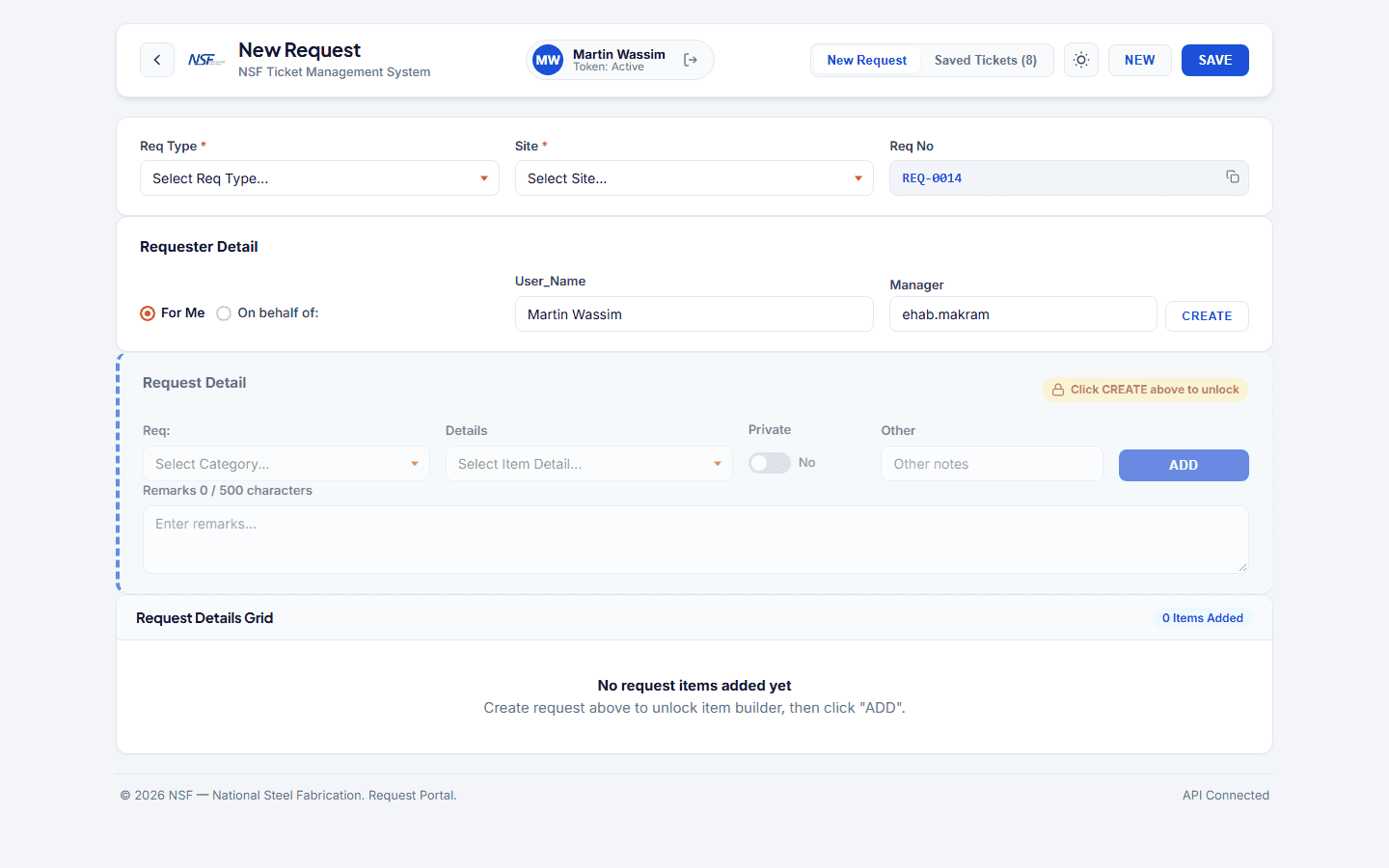
Employee creates request via web portal or desktop floor terminal.

STATE 02: APPROVAL
Director Verification

Department heads review priority and authorize hardware allocation.

STATE 03: DISPATCH
IT Specialist Action

Technical staff receive ticket with workstation IP and diagnostic log.

STATE 04: ARCHIVED
Immutable Audit Trail

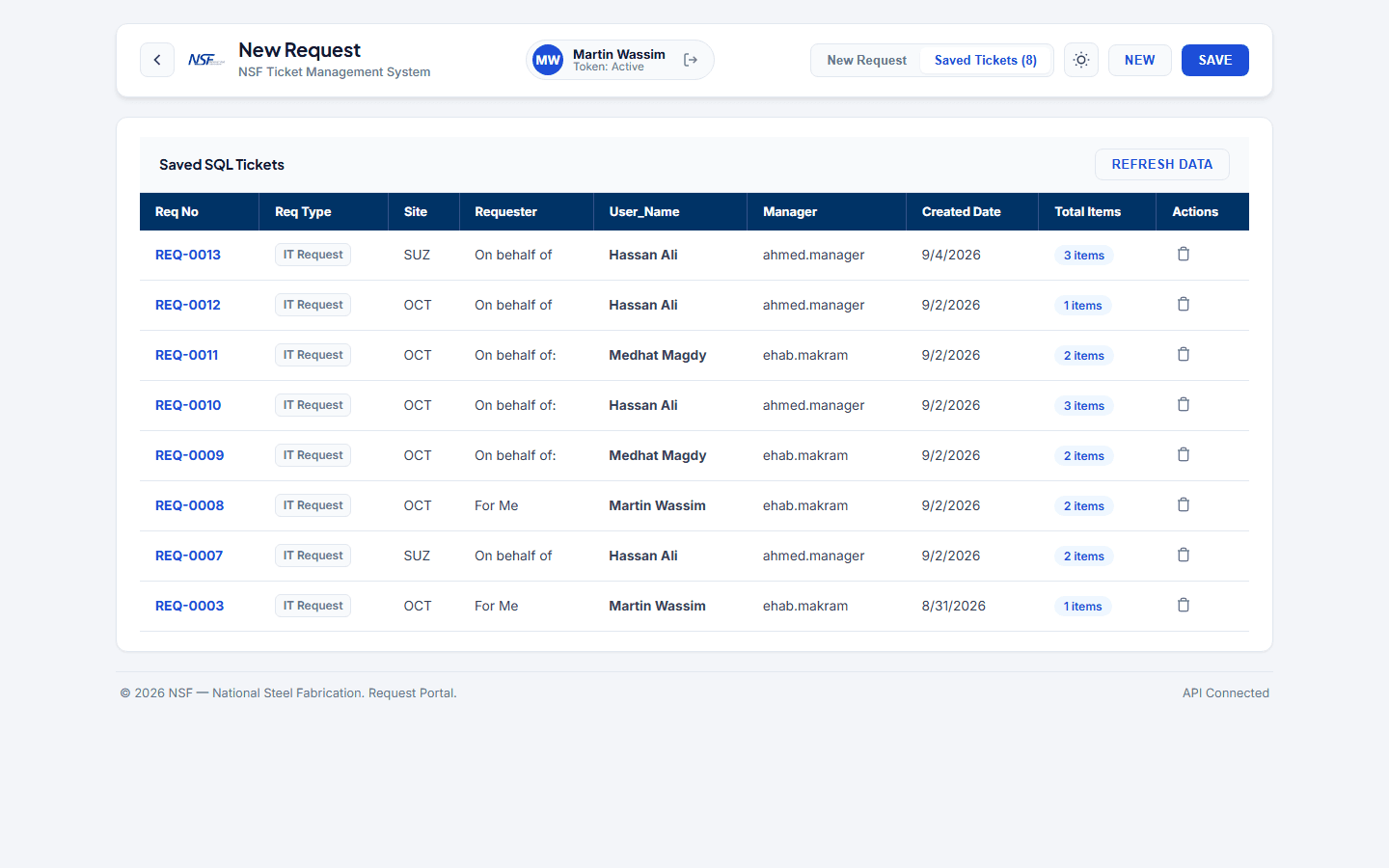
SQL Server trigger commits resolution SLA, user timestamp, and IP hash.
TECH STACK • CORE RUNTIME
C#ASP.NET Web APIVB.NET WinFormsSQL ServerJavaScriptHTML5CSS3
DOMAIN DISCIPLINE
Enterprise Software
Author: Martin Wassim
VERIFIED INTERFACE ARTIFACTS & ARCHITECTURAL DIAGRAMS
5 visual assets
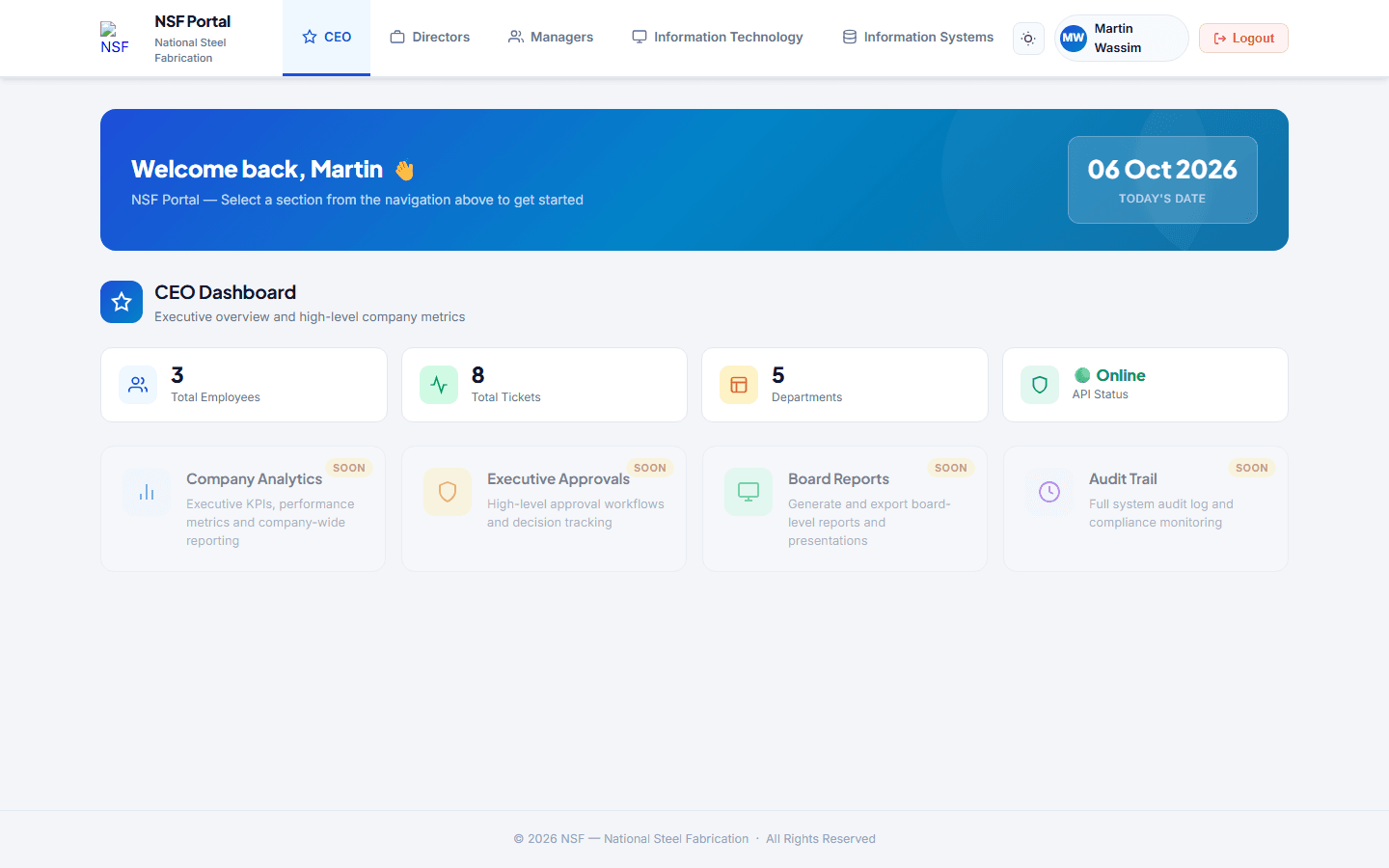
ENTERPRISE REQUEST SYSTEM screenshot 1
Figure 1: ENTERPRISE REQUEST SYSTEM — Visual EvidenceVerified Production Asset
ENTERPRISE REQUEST SYSTEM screenshot 2
Figure 2: ENTERPRISE REQUEST SYSTEM — Visual EvidenceVerified Production Asset
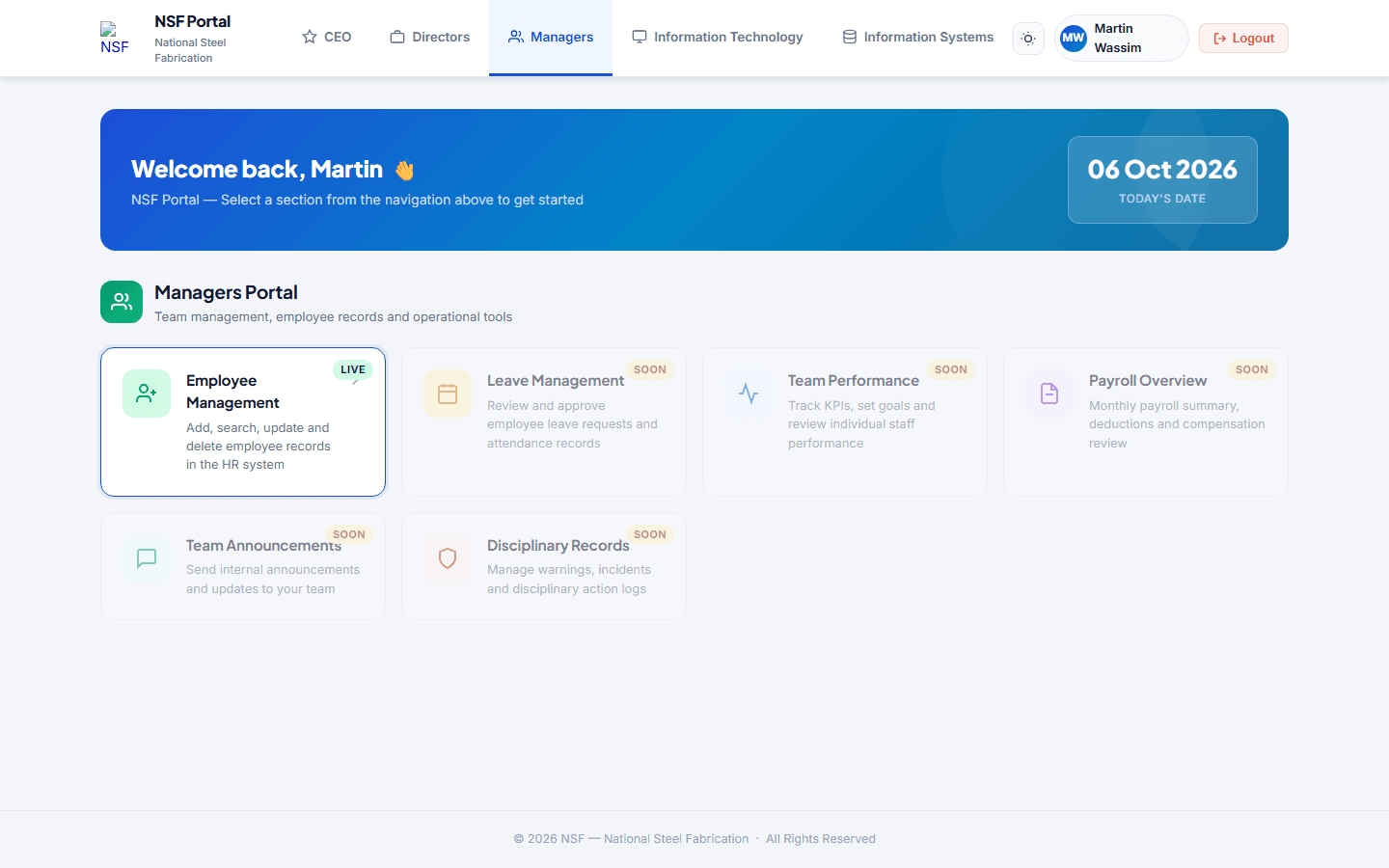
ENTERPRISE REQUEST SYSTEM screenshot 3
Figure 3: ENTERPRISE REQUEST SYSTEM — Visual EvidenceVerified Production Asset
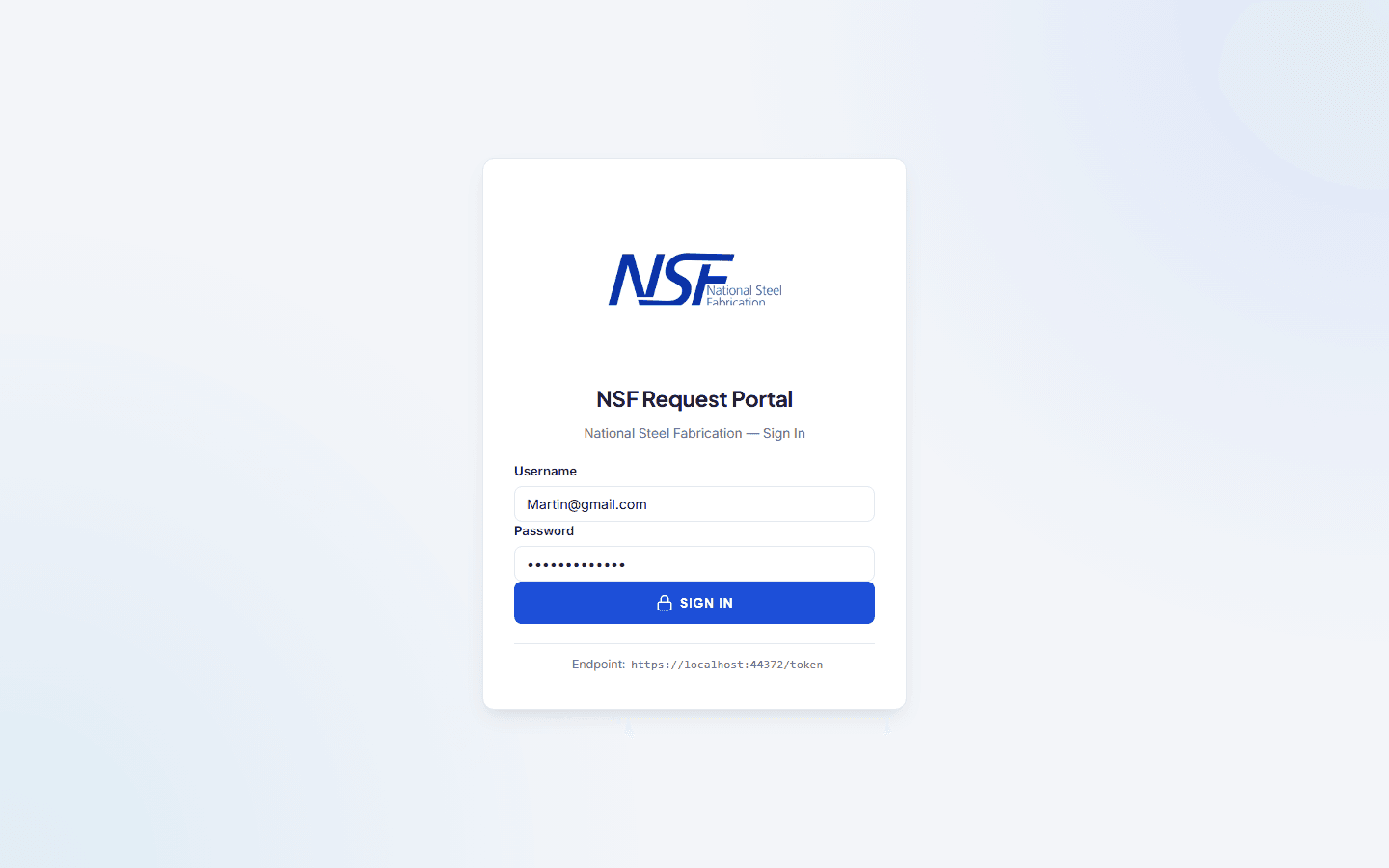
ENTERPRISE REQUEST SYSTEM screenshot 4
Figure 4: ENTERPRISE REQUEST SYSTEM — Visual EvidenceVerified Production Asset
ENTERPRISE REQUEST SYSTEM screenshot 5
Figure 5: ENTERPRISE REQUEST SYSTEM — Visual EvidenceVerified Production Asset
01 / THE PROBLEM BEING SOLVED

Operational & Technical Friction

Industrial manufacturing plants require reliable IT hardware/software dispatch across factory floors without losing tickets or bypassing management hierarchies.

02 / THE ARCHITECTED SOLUTION

Systemized Implementation

Architected a centralized ASP.NET Web API service connected to SQL Server, serving both office web users and plant floor desktop terminals.

03 / ACTUAL IMPLEMENTATION & WORKFLOW

How It Operates in Production

Constructed a multi-tier enterprise architecture. C# ASP.NET Web API handles business logic and security policies. Microsoft SQL Server guarantees relational data integrity. Desktop clients connect via async HTTP clients, while executive dashboards use modern responsive web views.

Designed clean relational schemas with foreign key constraints, parameterized queries to eliminate SQL injection, and asynchronous client communication.

04 / SYSTEM ARCHITECTURE EXPLANATION

Data Flow & Infrastructure

Desktop WinForms applications and responsive web clients communicate with a central ASP.NET Web API service. The API enforces transactional rules against Microsoft SQL Server, logging all actions to an immutable audit ledger.

Architectural Highlight: Normalized SQL Server relational design with transactional integrity, sequential ticket generation, and hierarchical manager approvals.
05 / KEY ENGINEERING DECISIONS
Centralized REST API backend: Decoupled client applications so both desktop terminals and executive browser dashboards consume identical business validation logic.
Role-based access control (RBAC): Strict permission boundaries prevent unauthorized staff from altering ticket priority or closing open service orders.
Audit trail immutability: Implemented database triggers to log workstation IP, user credentials, and previous field values on every update.
06 / CHALLENGES & MITIGATIONS
•Supporting legacy factory-floor Windows terminals alongside modern web executive monitors.
•Enforcing department approval hierarchies before tickets can be scheduled for IT hardware dispatch.
07 / VERIFIED CAPABILITIES
Hierarchical request routing across department directors and IT specialists
Dual interface: Web executive monitoring dashboard & desktop staff management
Role-based authentication with active manager lookup and directory integration
Strict lifecycle status state machine (Pending, In-Progress, Resolved, Archived)
Immutable audit log capturing user, workstation IP, timestamp, and changes
Executive overview with ticket volume metrics and SLA resolution timelines