RAG-Powered Document Assistant
Context-Grounded Academic Literature Intelligence with ChromaDB & Local LLM Orchestration
Executive Overview
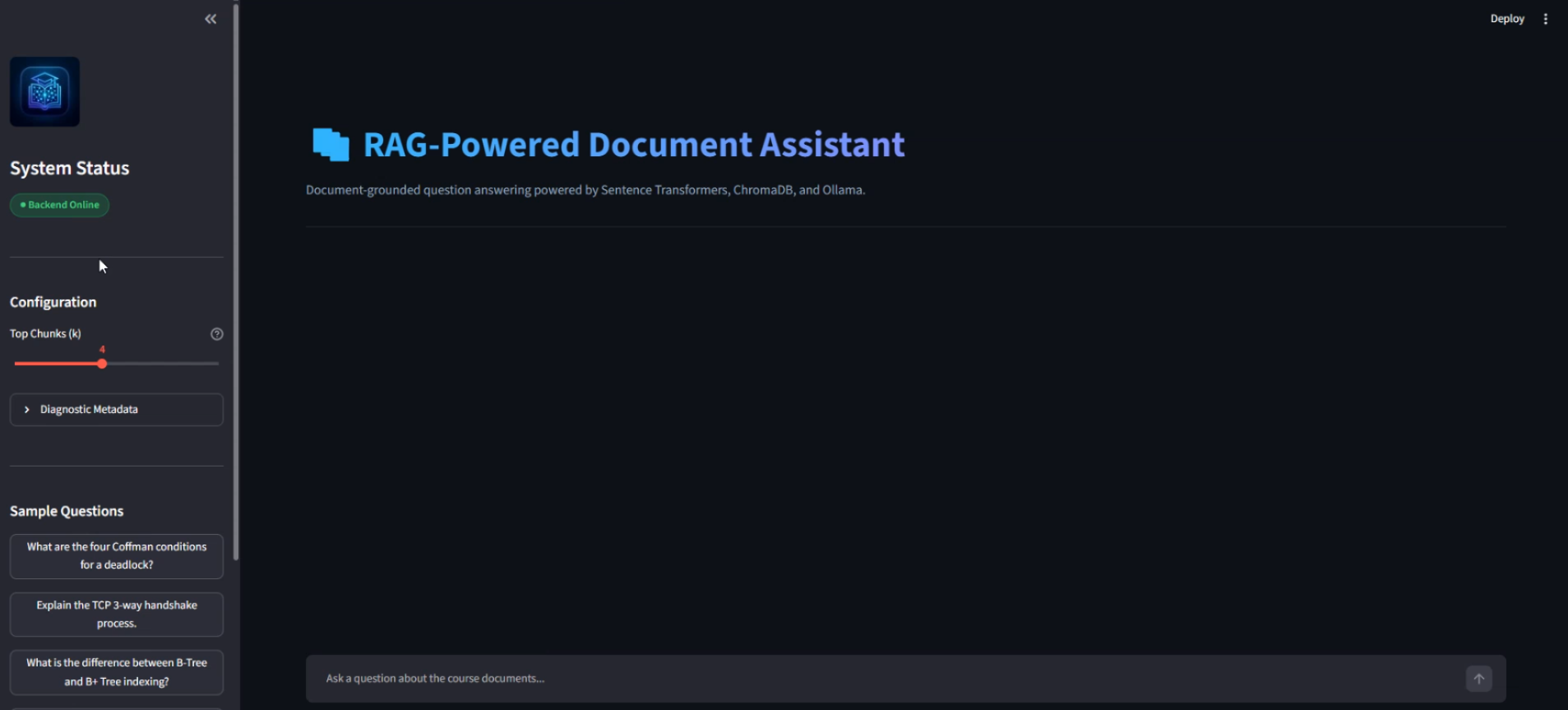
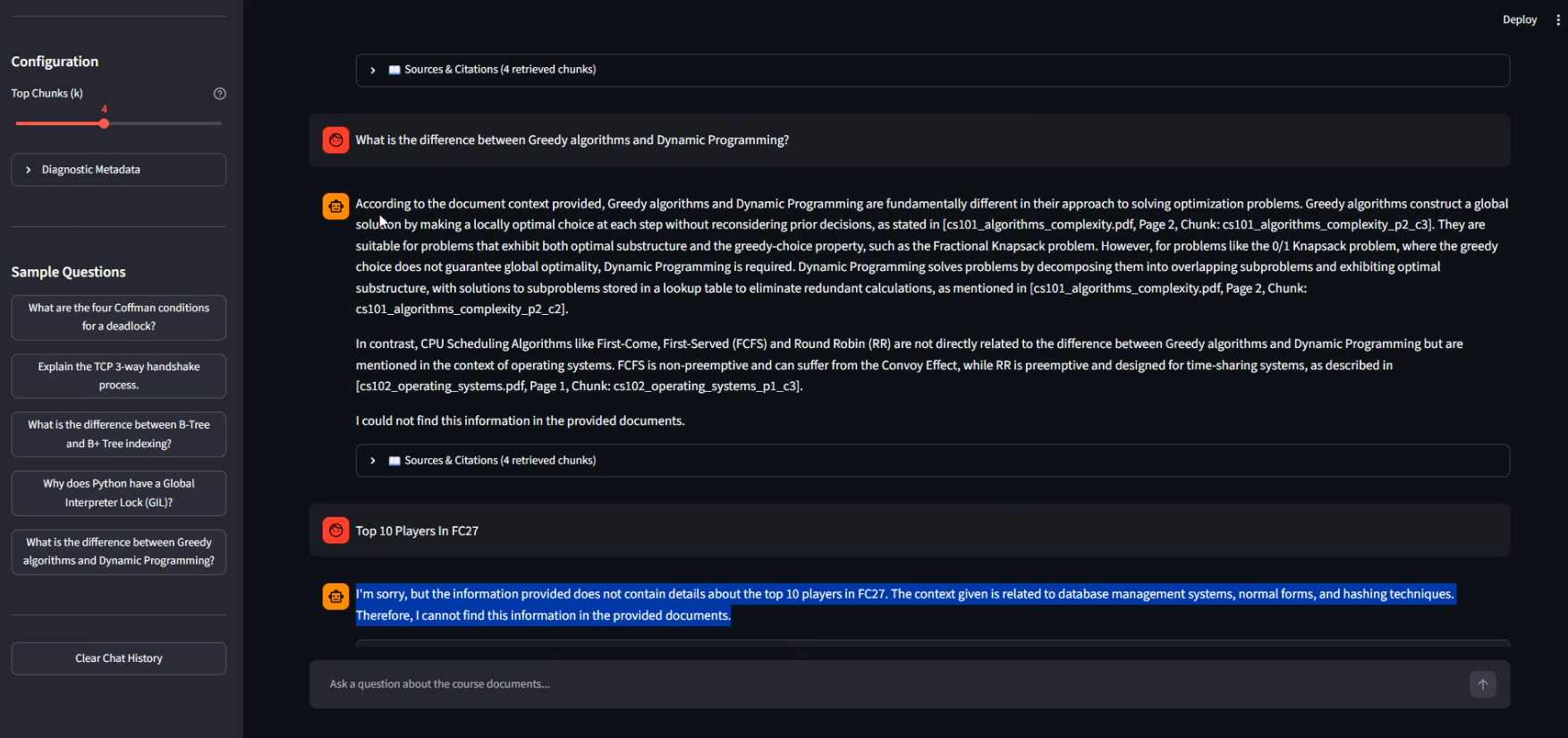
Axiom RAG is an enterprise-grade Retrieval-Augmented Generation system designed for grounded question answering across academic computer science literature and research papers. Operating 100% locally with zero cloud dependencies, the architecture eliminates hallucination through dense semantic embeddings, persistent vector indexing, and zero-shot grounding guardrails that enforce verbatim page-level citations.
The Challenge & Solution
The Core Problem: Standard Large Language Models frequently invent convincing but factually incorrect citations, misquote algorithms, and require expensive API tokens. Furthermore, academic research institutions and enterprise clients cannot upload proprietary research or confidential internal documentation to public cloud models.
The Engineering Solution: Constructed a robust offline RAG pipeline using Sentence Transformers (all-MiniLM-L6-v2) to generate dense vector embeddings, ChromaDB for high-throughput persistent vector indexing, and Ollama to orchestrate local quantized models (LLaMA 3 / Mistral). The prompt architecture strictly penalizes ungrounded speculation and forces the LLM to output source page numbers and exact passage citations.
System Architecture & Data Flow
Key Engineering Highlights
Zero Cloud Leaks & Privacy Preservation
Operates 100% offline with Ollama and ChromaDB; zero confidential data ever leaves local infrastructure.
Granular Citation Tracking
Every generated answer includes verified document citations, exact page numbers, and cosine similarity relevance metrics.
High-Throughput FastAPI Backend
Engineered with modern async FastAPI Lifespan architecture, health check endpoints, and input sanitization.
Dual UI & Docker Deployment
Includes an interactive Streamlit chat interface and multi-container Docker Compose configuration for one-command deployment.
Automated Test Suite
Full test coverage using Pytest verifying chunking boundaries, embedding matrix dimensions, and API response contracts.
